Business loan changes stay traceable
After funding, business loans still move. Payments fail, terms shift, invoices age, card activity lands.
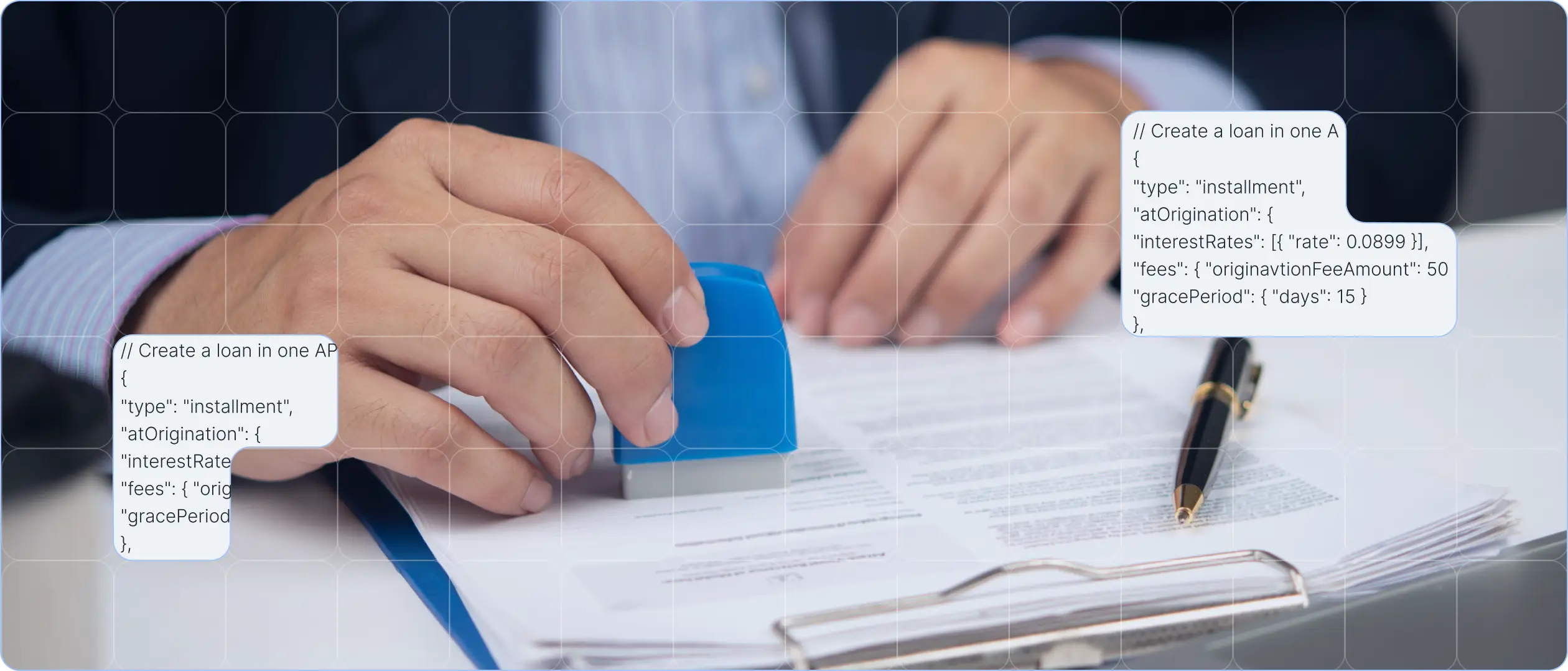
Peach keeps those changes in one servicing record with Loan Replay™, ledger history, and APIs engineers can inspect before the first call.
$2B+ in active loans across 50+ lenders






After funding, the numbers still add up


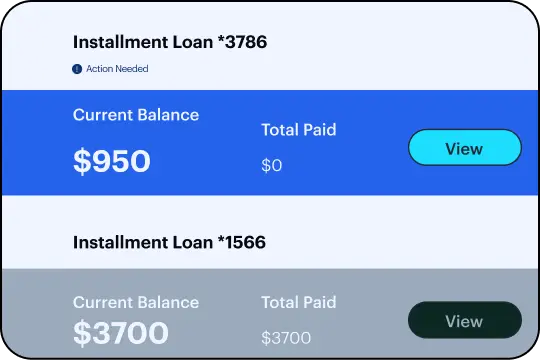

Balances stay explainable
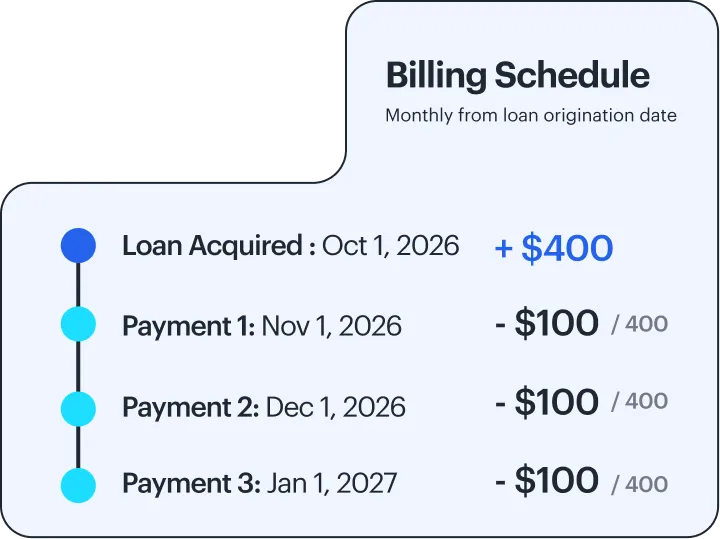
Events stay with the borrower
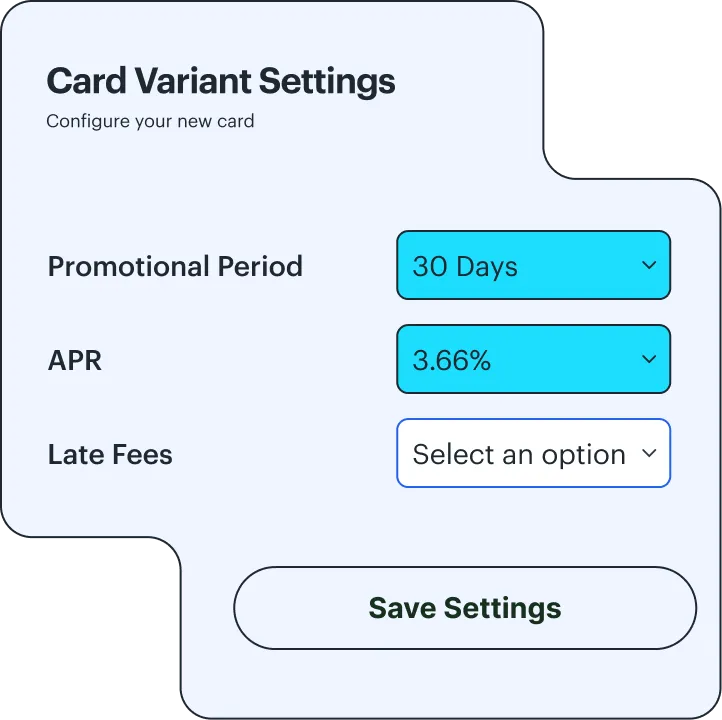
Work stays in servicing
Start with the product you're servicing
Business installment loans
Secured or unsecured, closed-end business loans are built-in Peach loan types, so a term change doesn't mean digging through exports.
Business credit products
Statements, draws, card activity? Open-end credit has its own Peach loan type. None of that work ends up in side files.
The mechanics are visible before build work

Adaptive Core keeps the product configurable
Business products evolve after launch. Adaptive Core holds 200+ config variables, and a new loan type ships in hours, not a release cycle.
Loan Replay™ recalculates late changes
A failed payment, fee waiver, or backdated rate change lands late. Loan Replay™ recalculates forward with ledger history intact.
Compliance Guard keeps two jobs clear
Messages need checks. Events need cases. Compliance Guard Rules and Monitor keep both jobs in the servicing record.
APIs make diligence concrete
Diligence shouldn't wait for a sales call. The API docs are public and the OpenAPI spec is downloadable, so your engineers can start today.
Your team can see how the system connects
Card programs and data paths add partner risk. Peach shows the connection points up front, so surprises surface before the build.
API docs
Endpoints, events, ledger records. A business lending build hits edge cases, and the docs spell out all three before scoping starts.
Card programs
Card products need an issuing partner. Peach supports deployments through Lithic and Marqeta, so reporting covers card activity too.
Payment and data paths
Real time for APIs and webhooks. Your schedule for replica data and loan tapes. Finance gets reports without waiting on engineering.
Communications
Borrower outreach carries compliance risk. Every outbound message gets checked against Compliance Guard Rules before it sends.
The mechanics above have to survive review. This is how they hold up with your board, your CFO, your auditors, and your engineers.
Why business lending runs better on Peach

One borrower across products
A business with an installment loan and a charge card is one borrower in Peach. Cases and history attach to the company, not per loan.

History stays traceable
Late changes can break trust in the numbers. Loan Replay™ recalculates forward, so the balance has a paper trail your CFO can follow.

Rules enforce themselves
Auditors ask what stops a bad send. Program-level Compliance Guard Rules don't allow agent overrides, so the control is the system.

Integration skips the ID mapping
Integrations usually start with an ID-mapping table. Peach accepts your system's IDs as external IDs. Both systems keep their own keys.

Partnership starts with scope
Business credit products vary. Peach starts from your product and its servicing work. The first call is a scoping session, not a pitch.
Tested at real scale
One large fintech saw system timeouts drop from tens of thousands to a few hundred per week. Production borrowers. Real money on the line.
Lending programs already run on Peach
When your board asks who else runs lending on Peach, you'll have the answer.






Map the business lending backend
Bring the product you're servicing. We'll trace the payments, events, records, and integrations it needs after funding.